

Why ube, yuzu, and Indian cocoa are trending, and what matcha already taught us
Every few years, a flavor slips its borders. It starts as something you could only find in a specific kitchen, in a specific city, prepared by people who never thought of it as exotic, because to them, it wasn't. And then, somehow, it turns up in a latte in London, a cookie in Los Angeles, a dessert menu in Dubai. Four flavors are living through this exact migration right now: ube, yuzu, Indian cocoa, and matcha. Three of them are mid journey. One of them has already arrived, and its arrival is the reason we can guess, with some confidence, what's coming for the other three.
This is that story, told roughly in order of how far along each flavor is.
Ube: The Color That Traveled Before the Word Did
Long before ube showed up on a coffee shop menu board anywhere outside Southeast Asia, it was doing something much quieter: sitting on a dinner table.
In Filipino households, ube has never been a novelty. It's a Sunday food, a fiesta food, a table centerpiece for birthdays and weddings and Christmas, the kind of dish an aunt makes in a big batch because there's no such thing as a small batch when the whole extended family is coming over. Its most iconic form, ube halaya, is a thick, purple, coconut milk and condensed milk jam that traces back to the early 20th century, when home cooks began experimenting with ways to turn the boiled root into something closer to dessert. The vivid purple wasn't just decorative. In Filipino tradition it carried associations with celebration, abundance, and even nobility, which is part of why halaya tends to show up specifically at occasions rather than as everyday fare.
Source: Recipe from www.kawalingpinoy.com/
A bit of trivia worth holding onto: the first known written mention of ube dates back to 1613, in an early Tagalog and Spanish dictionary, where it was classified alongside sweet potatoes rather than yams. It took later botanists to sort out that ube actually belongs to the Dioscorea family, a whole different branch of the plant world. In other words, people were arguing about how to categorize ube four centuries before anyone put it in a latte.
What changed the shape of ube into the dessert people now recognize globally was a collision of local and imported ingredients. Coconut milk had always been on hand, but condensed milk and butter only entered Filipino kitchens during the American colonial period in the early 1900s. That combination is what eventually became the halaya recipe passed down through generations. By the mid 20th century, Filipino bakery chains had standardized ube cakes and pastries, moving the flavor from home kitchens into commercial shelves, but still almost entirely within the Philippines and its diaspora.
For decades, that's where it stayed. Fresh ube doesn't travel well. It's perishable and labor intensive to prepare, so even Filipino communities abroad had trouble sourcing it reliably. Asian grocery stores were, for a long time, the only place you could find it outside the Philippines, tucked away as puree, halaya in a jar, powder, or syrup, mostly bought by people who already knew exactly what to do with it.
What's happening now is different. Ube has stopped being an ingredient you need to already know about to encounter. It's landing in bakeries, ice cream shops, and beverage menus that have no connection to Filipino cuisine at all, driven largely by how the color performs on a table, on a screen, in a photo. Food industry analysts have described ube's rise as following almost exactly the same trajectory matcha did years earlier: from cultural specialty, to diaspora staple, to global premium flavor. Demand has, in fact, grown fast enough that farmers in the Philippines are reportedly struggling to keep pace with international orders, a supply strain that will sound very familiar by the end of this article.
Ube also has its own hierarchy of cultivars, the same way tea does. Just as Uji matcha has named cultivars prized above the rest, ube has kinampay, grown almost exclusively on the island of Bohol, celebrated for its aroma, sweetness, and deep, smooth rooted purple, and important enough locally to have its own annual harvest festival. Alongside it sit other named varieties, zambal, sampero, and a handful of lesser known regional types, each with its own shade of purple, sweetness, and starch behavior depending on soil and season. Almost none of that nuance survives once ube reaches a shelf abroad labeled simply "powder."
That flattening points to a real friction underneath ube's sudden rise. For most of its history, ube wasn't bred or processed with a latte or a soft serve machine in mind. It was bred for halaya, for biko, for a spoon and a plate. A drink needs something different: a fine, evenly milled, food grade powder that dissolves cleanly instead of settling at the bottom of the cup or leaving a gritty finish. A cultivar celebrated for its texture in a jam isn't automatically the right fit for that job. The sudden spike in café demand has pushed the Philippine ube industry to scramble for processing capacity, drying and milling equipment capable of hitting the fine, consistent mesh size a beverage needs, rather than the coarser grind that's served desserts perfectly well for a century.
Two shortcuts have emerged to bridge that gap. The cheaper one is ube extract, a liquid flavoring where, in most commercial versions, the vivid purple comes almost entirely from artificial red and blue food dye rather than the yam itself, with some formulations containing little to no actual ube. It's an easy way to hit an Instagram ready hue without solving the processing problem underneath it. The other route, taken by cafés more invested in an authentic result, has been to chase a natural color just as saturated as the dye based version, which is no small task. Real ube's pigment is a plant anthocyanin, genuinely harder to render at that same neon intensity without proper whole food processing behind it.
Source: Top Ube extract choice globally for decades
Because Philippine processing capacity hasn't fully caught up with demand, a meaningful share of ube grown there has been shipped elsewhere to be milled, much of it to China, where industrial hubs like Shaanxi already have the scaled drying and grinding infrastructure to hit food grade specs at volume. But sourcing the raw crop and owning the category aren't the same thing. The suppliers most associated with authentic, traceable ube, the ones building trust on "grown here, processed here," remain overwhelmingly Filipino, alongside longstanding growers elsewhere in Southeast Asia, companies with generations of relationship to the crop rather than newly built extraction lines. Meanwhile, the Philippine trade industry is actively working to close that capacity gap, expanding domestic processing and pushing toward the global food safety standards that would let more of the value stay where the ube is actually grown.
Ube's advantage right now is that it doesn't need an origin story invented for it. It already had one. What it's still catching up on is the infrastructure, the same growing pain matcha worked through a generation earlier.
Yuzu: The Citrus That Refuses to Be Simple
If ube is winning on color, yuzu is winning on complexity.
Yuzu is a small, uneven skinned Japanese citrus that resists easy description, tart like lemon, slightly bitter like grapefruit, but with a floral, almost herbal aromatic quality that neither of those fruits has on its own. That complexity is exactly why it's having a moment. Consumers who have spent years defaulting to "lemon" or "lime" as their citrus shorthand are actively looking for something with more depth, and yuzu delivers depth without asking anyone to abandon citrus altogether. It's an easy flavor to say yes to, which is part of why it's shown up everywhere from craft cocktails to hot sauces to bakery items in the last couple of years.
Here's a small oddity worth knowing: yuzu trees can take up to a decade to bear their first fruit, and the tree is famously thorny and slow to cultivate, which is part of why yuzu has stayed a comparatively rare, prized crop even inside Japan, rather than becoming an everyday commodity citrus the way lemons did in the Mediterranean.
But yuzu's real distinction is that it wasn't invented as a flavor trend. It was inherited as a tradition. In Japan, yuzu has been part of daily and seasonal life for centuries, well beyond the kitchen. It flavors ponzu sauce, but it also gets floated whole in hot baths during the winter solstice, a practice believed to ward off illness and considered part of Japanese wellness custom long before "wellness" was a category. That dual life, as an everyday flavor and as a ritual object, is exactly the kind of provenance story that resonates with consumers right now, who increasingly want to know not just what something tastes like, but why it has mattered to the people who've used it for generations.
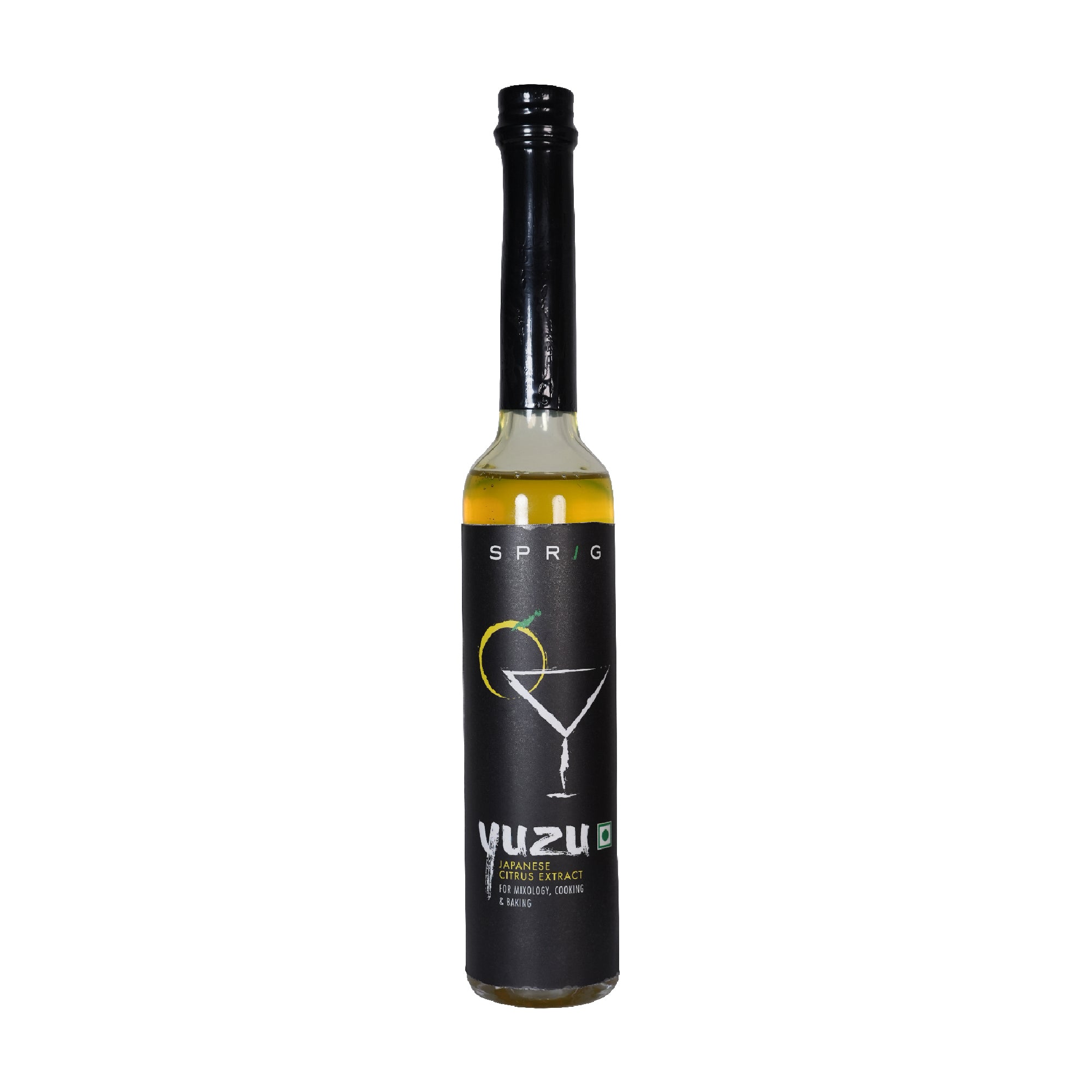
Where ube is riding a wave of visual virality, yuzu is riding a wave of curiosity about authenticity. It rewards a slower kind of attention, which is also, not coincidentally, the exact quality that will come up again when we get to matcha.
Indian Cocoa: The Origin Story Still Being Written
Indian cocoa is the outlier in this list, and it's worth naming that directly instead of forcing it into the same shape as the other three. Ube, yuzu, and matcha are, in different ways, already demand stories, flavors that global consumers are actively seeking out. Indian cocoa, right now, is a supply story. It's less "why is everyone suddenly craving this" and more "why is this quietly becoming a serious place to source from."

Source: Economics of Cocoa Farming in India: Costs, Yields, and Opportunities by Rangde
India's cocoa is grown almost entirely in the south, Kerala, Karnataka, Andhra Pradesh, Tamil Nadu, and for a long time domestic cultivation played a supporting role to imported beans, blended into large scale processing operations rather than marketed as a distinct origin. That's shifting. Domestic cocoa production reportedly grew by nearly half between 2017 and 2022, with output expected to approach 30,000 metric tons by 2026, backed by government cultivation programs aimed at expanding the crop. Part of what's driving the shift is global, not local: shrinking cocoa suitable land in West Africa, currently the source of most of the world's chocolate, is pushing manufacturers to look for climate diversified, geographically distinct alternatives, and India's humid southern climate happens to be well suited to the crop.
Alongside the large processors, a much smaller but culturally significant wave of Indian bean to bar chocolate makers has emerged, built around single origin sourcing, ethical supply chains, and, increasingly, local flavor pairings like cardamom, saffron, and chili folded into premium dark chocolate. It's a young movement compared to Japan's centuries old tea culture or the Philippines' generational relationship with ube, but that's precisely the point. Indian cocoa is a flavor story in its early chapters, being written in real time by farmers, cooperatives, and small producers who are, in a sense, doing the groundwork that Uji did for matcha five hundred years ago.
Which brings us to the flavor that's already finished the journey the other three are on.
Matcha: The Flavor That Already Made the Leap
To understand why matcha occupies a different tier than ube, yuzu, or Indian cocoa, you have to go back further than any flavor trend cycle, back to 12th century Japan, when Zen Buddhist monks returning from China brought with them the practice of grinding tea leaves into powder and whisking them with hot water. What started as a monastic aid to concentration during meditation was gradually absorbed by the samurai class through the Muromachi period, where it evolved into something closer to ritual than refreshment: tea tasting competitions, wagers on identifying origin, elaborate gatherings that eventually got refined, by the 16th century tea master Sen no Rikyū, into the deliberately understated, deeply intentional ceremony still practiced today. Matcha wasn't a beverage choice in that world. It was closer to a discipline, something warriors reportedly turned to for mental clarity and recovery as much as for taste.
Anyone who drinks matcha regularly will recognize a feeling that goes beyond flavor: a settled, alert calm that lingers well after the cup is finished, distinct from the jittery lift of coffee. That's not incidental. It's L-theanine, an amino acid that the shade growing process concentrates heavily in the leaf, working alongside matcha's caffeine to produce a steadier kind of focus rather than a spike and crash. It's a fitting biochemical footnote to a drink invented, centuries ago, specifically as an aid to meditation. The monks, it turns out, were onto something long before anyone had a word for it.

That history is exactly why matcha became, and stayed, the tea at the top of Japan's hierarchy. For centuries it was the tea of ceremony, of status, of formal occasion, ground from shade grown leaves in a labor intensive process that made it inherently limited in supply and elevated in meaning.
Everything else in Japanese tea culture developed underneath that ceremonial peak, built for daily life rather than ritual. Sencha, steeped loose leaf tea, became the standard household drink during the Edo period, prized precisely because it was accessible in a way matcha never was. Genmaicha, green tea blended with roasted rice, emerged around the same time as a way to stretch tea further and make it more nourishing for ordinary households, a practical, humble drink rather than a symbolic one. Hojicha came later still, developed in Kyoto as a way to use up leftover stems and lower grade leaves by roasting them, which also had the effect of lowering caffeine and mellowing bitterness, a tea associated less with ceremony and more with an easy, everyday cup, still favored today particularly by older generations for exactly that reason. For most of Japanese history, if you wanted tea with your dinner, you were far more likely to be drinking hojicha or genmaicha than matcha. Matcha was for the tea room, not the table.
What changed matcha's position wasn't a shift inside Japan. It was the rest of the world discovering it, in earnest, over roughly the past two decades. As global interest in Japanese culture, wellness, and antioxidant forward diets grew, matcha migrated out of the ceremonial context and into lattes, desserts, skincare, and supplement aisles worldwide, carrying its ceremonial prestige with it as a kind of built in premium positioning that newer trend flavors have to work much harder to earn. Today, matcha is projected to keep growing at a rate comparable to newer arrivals like ube, but from a base that's already firmly mainstream, already trusted, already synonymous with "premium" in a way ube, yuzu, and Indian cocoa are each still working toward in their own markets.
A few things worth knowing about where matcha stands today:
- Cold brew and "dirty matcha" are the format of the moment. Rather than the traditional hot, whisked bowl, matcha is increasingly steeped or shaken cold, sometimes layered with a shot of cold brew coffee, a hybrid drink café trend watchers have named among the top cold beverage formats of the year, appealing to the same drinkers who reach for iced coffee year round.

Source: Yuzen Matcha's Smoked Vanilla Matcha Chai recipe from the Whiskbook
- Cultivar and competition culture is having its own moment. Just as wine has vintages and estates, Uji matcha has named cultivars, Samidori, Asahi, Ujihikari, and Gokou among them, each entered into Japan's National Tea Competition, where a Minister's Award or a rare perfect tasting score from a recognized tea master can define a farmer's reputation for a generation. It's a level of connoisseurship most matcha drinkers abroad have never been introduced to, but it's exactly the kind of detail that separates a genuinely ceremonial grade tea from a green powder wearing the name.
- China is emerging as both a matcha producer and a public markets story. Domestic Chinese matcha production is growing quickly in regions like Guizhou, and Chinese tea chain culture has been pushing toward U.S. public markets, most visibly with Chagee, a Chinese tea chain that pursued a Nasdaq listing as it expanded into the U.S. It's a reminder that "matcha" and "Japanese tea" are increasingly two separate conversations, even if Uji remains the reference point for quality in both.
- Tea ceremony culture, omakase style, is arriving in India. Curated, multi course tea experiences, modeled on the intimacy of an omakase meal rather than a quick café order, have started appearing in Japan and the U.S., and the same format is now landing in India. Yuzen hosted India's first matcha omakase, bringing that slow, guided, course by course tea experience to a market that, until recently, only knew matcha as a latte.

Source: First Matcha-omakase in India, organised by Yuzen Matcha
- Tencha and sencha are worth knowing apart. Tencha is the shade grown, unrolled leaf that gets stone ground into matcha. Sencha is steamed, rolled, and steeped whole rather than whisked as a powder. Same plant family, completely different processing path, and increasingly, café menus are expecting customers to know the difference.
- Matcha has grown its own support industry. Matcha consultants now advise cafés and brands on sourcing, grading, and menu design the way coffee consultants have for decades, while L-theanine has broken out of matcha entirely to become a standalone supplement ingredient, sold on its calming, focus supporting effects to people who may never drink a cup of tea at all.
And within matcha itself, there is still a hierarchy of place. Just as Japan's tea culture elevated one preparation, powdered, ceremonial grade tea, above the more everyday roasted and blended teas, one growing region has held a similar position within matcha specifically for centuries: Uji, in Kyoto. Long before matcha was a global commodity, Uji was already understood, within Japan, as the origin that mattered most, the way a wine drinker understands that "Champagne" refers to a place before it refers to a style. Uji's reputation for producing the country's highest quality tea is not a modern marketing construct. It's a centuries old regional identity that predates the current global matcha boom by a wide margin.
That's the principle we've built Yuzen around. Ube, yuzu, and Indian cocoa are each proving, in their own way, that where a flavor comes from is inseparable from what it becomes, that provenance isn't a footnote, it's the whole story. Matcha proved that first, and Uji proved it before matcha ever left Japan. It's why we source Daichi and the rest of our range directly from Uji rather than treating "matcha" as an interchangeable green powder. The place was never incidental to the flavor. It was always the point.
Four Flavors, One Curve
Line them up and a pattern appears. Ube is riding visibility, a flavor whose color reached the world before most people learned to say its name properly, now straining under demand it can barely keep up with. Yuzu is riding complexity, a citrus finally getting credit for being more interesting than the fruits it's usually compared to. Indian cocoa is riding possibility, an origin story still in its opening chapters, being written by growers and small producers in real time. And matcha has already closed the loop: from monastery, to samurai ritual, to household hierarchy, to global obsession, with one region, Uji, anchoring the whole story from well before anyone outside Japan was paying attention.
Four different points on the same curve. The flavors changing fastest right now are simply retracing, in years, a path matcha walked over centuries.
We went and found ours in Uji. If there's a flavor you think deserves the same treatment, ube, yuzu, something else entirely, write to us at hello@yuzen.in and help shape what we bring in next.

